Drip Edge, Flashing & Valleys
Drip Edge, Flashing & Valleys
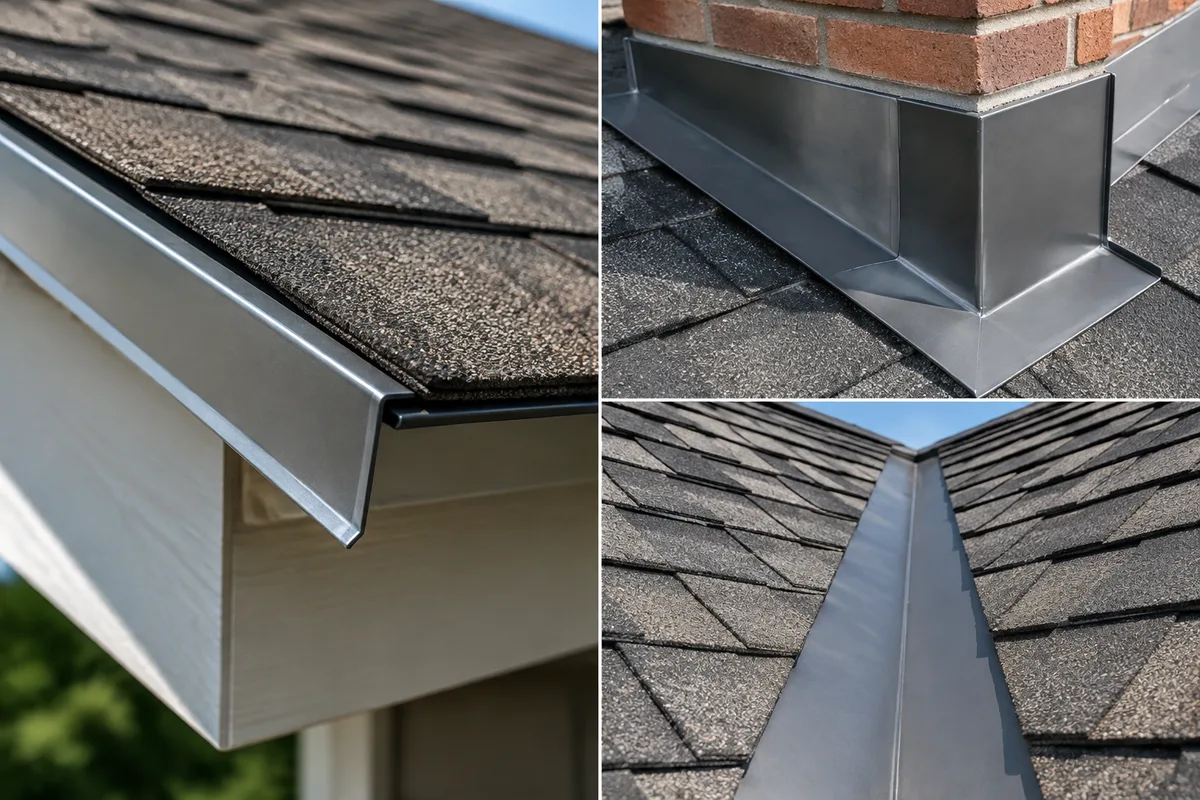
Drip edge, flashing, and valleys are the metal details that keep water moving off a roof instead of finding its way under the shingles. They handle the transitions — the roof's outer edge, the joints at chimneys and sidewalls, and the low points where two slopes meet — and they are usually the first thing to check when a leak shows up with no obvious hole in sight.
What This Work Covers
- Drip Edge — metal set along eaves and rakes so water sheds into the gutter instead of running behind it.
- Step & Wall Flashing — formed pieces at chimneys, skylights, and sidewalls that close the gap between roofing and vertical surfaces.
- Valleys — the metal or membrane lining where two roof planes meet, built to carry a heavier flow of water than any other part of the roof.
How We Approach It
We bend and cut flashing and drip edge on site with portable sheet metal brakes, electric shears and nibblers, and tin snips and hand seamers, so each piece fits your roof's actual lines rather than a stock profile. Chalk lines, framing squares, and laser distance meters keep valley layout straight before anything is fastened. Caulking guns and heat guns finish sealant and flashing detail work at the right temperature so it bonds rather than lifting the next season.
When to Call
- Interior stains near a valley or chimney — a common sign flashing has failed rather than the shingles themselves.
- Visible rust, gaps, or lifted metal — worth a look before the next heavy rain.
- Ahead of a full re-roof or repair — pairs naturally with underlayment and ice-and-water shield work already planned for the job.