Wind & Hail Damage Repair
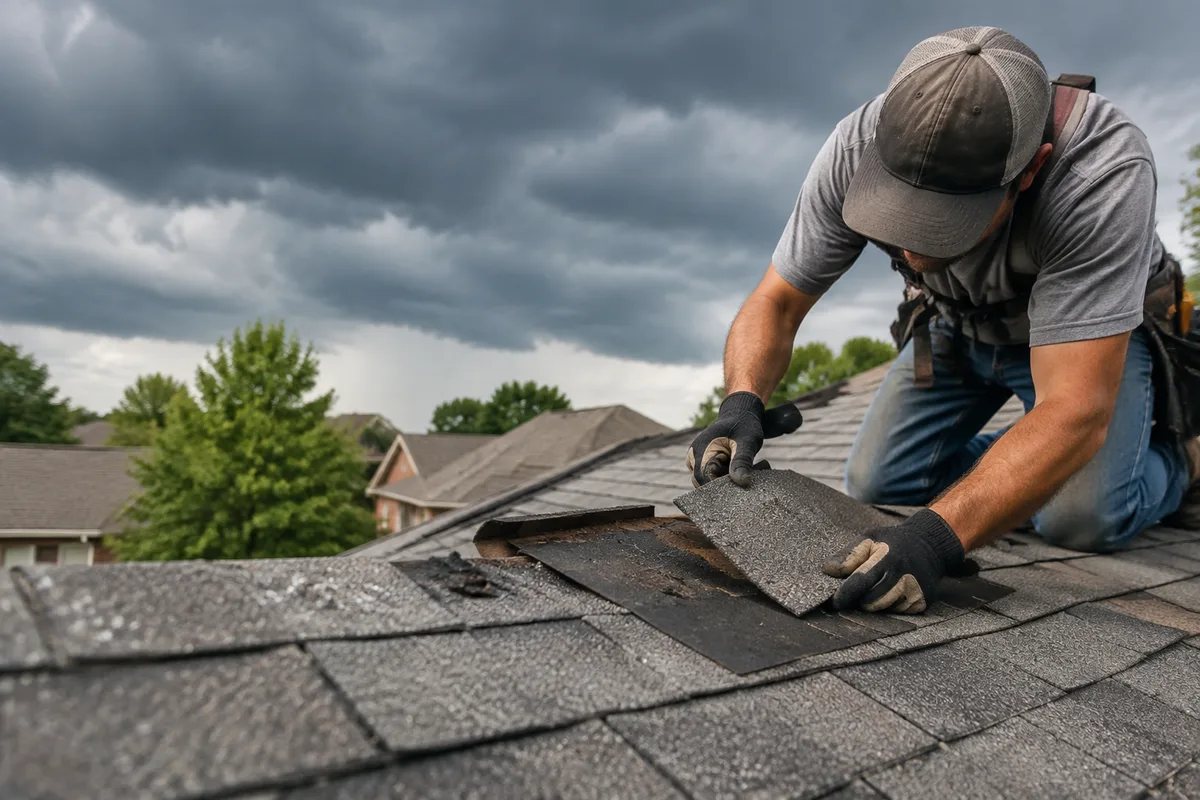
Wind & Hail Damage Repair
Wind and hail move fast across a roof, and the damage they leave is not always where it looks like it should be. Lifted or bruised shingles, dented metal, and cracked tiles are the visible signs, but a hard gust can also drive water under a seam that shows no outward mark at all. In Bradenton, storms often bring both wind and hail in the same pass, so a repair plan needs to account for impact damage and wind-uplift damage together.
Finding What the Storm Actually Did
- Aerial & Handheld Infrared — Drones with thermal and high-res cameras, along with handheld infrared cameras, trace a leak back to where water is actually entering the roof assembly.
- Moisture Meters — Direct readings through decking and insulation show how far water traveled under the surface after wind or hail opened a path.
- Aerial Measurement Reports — EagleView reports measure every slope and penetration so material counts are exact before repair work starts.
Repairing the Roof Itself
- Structural Fasteners — Pneumatic coil roofing nailers set fasteners at the nail pattern and depth Florida's wind-uplift requirements call for.
- Custom Metal Work — Portable sheet metal brakes and hand seamers rebuild flashing and trim to fit the roof, not the other way around.
- Documentation — Time-stamped photos of every stage are shared straight to you through CompanyCam.