A Few Missing Shingles: Big Deal or Not?
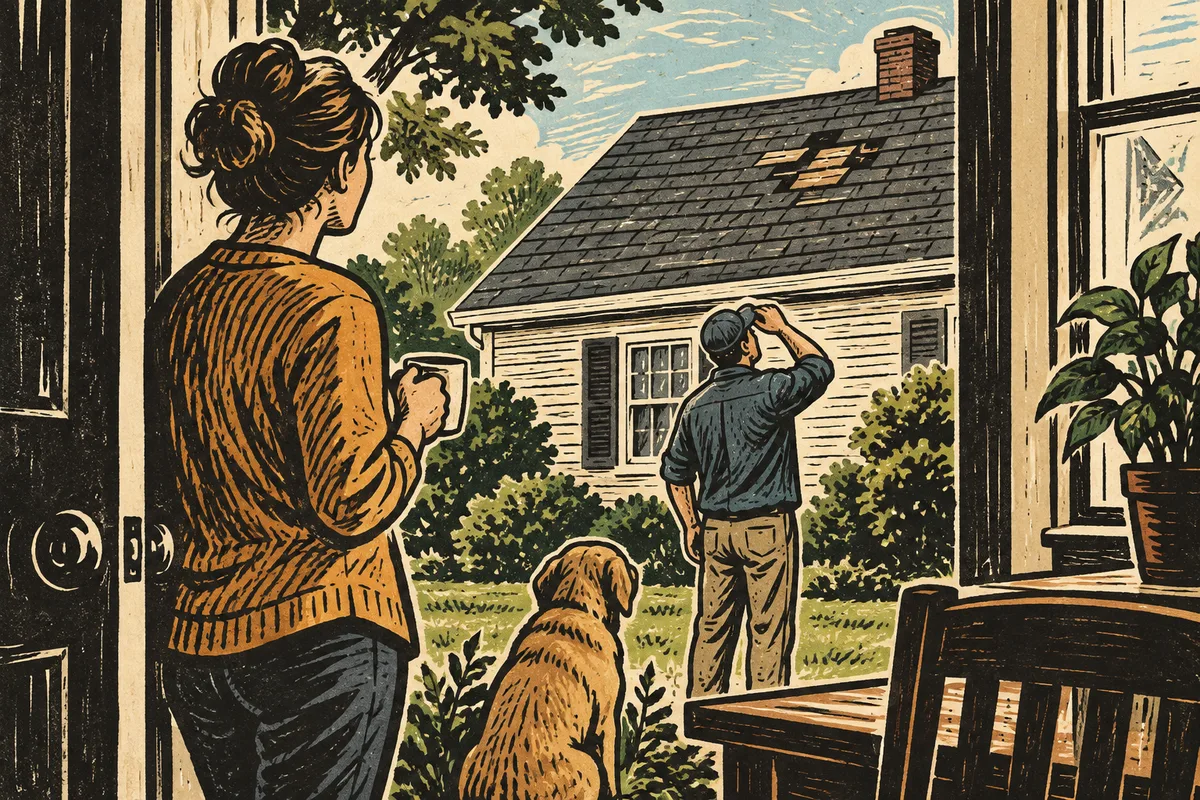
You walk out to grab the mail after a windy afternoon, glance up, and notice a bare spot on the roof. Maybe two or three shingles are gone. The rest of the roof looks fine. The ceiling inside is dry. So is this worth a phone call, or can it wait until something actually leaks?
It is a fair question, and homeowners in Bradenton ask it often. The honest answer is that a few missing shingles usually are not an emergency on day one. But they also are not something to forget about, because what sits under those shingles was never designed to be the outer layer of your roof.
Here is what is really happening up there, and why catching it early tends to be the easier road.
Your Roof Is a Team, Not a Single Layer
Most people picture a roof as shingles on top of wood. There is actually more going on. Under the shingles sits underlayment, a protective sheet that acts as a backup barrier. Under that is the decking, the wood surface that everything else attaches to. Below the decking are your rafters or trusses, insulation, and eventually your ceiling.
Shingles do the heavy lifting. They shed water, block sunlight, and take the beating from wind and rain so the layers below stay dry and stable. Underlayment is a second line of defense meant to handle the occasional drip that sneaks past, not constant exposure to weather.
When shingles go missing, that backup layer is suddenly the front line. It will hold for a while. It just was not built to do the job alone for very long.
What Exposed Underlayment Goes Through in Florida
Our climate is tough on building materials. Intense sun, heat that lingers, heavy afternoon downpours, and humidity that never fully lets up all work on exposed material faster than they would in a milder place. Underlayment left uncovered can dry out, grow brittle, curl at the edges, or tear where it is fastened down.
Wind is the other factor. Once a section is loose or torn, gusts can get underneath and peel it back, which widens the opening. A bare patch the size of a dinner plate can become a bare patch the size of a door, especially during storm season when the wind arrives in waves.
After that, water reaches the decking. Wet wood swells, softens, and can start to break down. Moisture that works its way into the attic can dampen insulation, which makes it less effective, and it can create conditions where mold takes hold. None of this announces itself with a dramatic drip at first. It usually shows up later as a stain on a ceiling, a musty smell, or a soft spot a roofer finds during an inspection.
That is the part worth understanding. The timeline between missing shingles and visible interior damage can be long. The damage in between is quietly adding up.
Why a Small Patch Is Smart Protection
Replacing a handful of shingles while the underlayment and decking are still sound is a short, straightforward job. Replacing shingles after the deck has taken on water is a bigger one, because now there is wood to cut out and rebuild before anything can go back on top.
Small repairs also give you information. When a roofer is up there fixing a bare spot, they can see whether the surrounding shingles are lifting, whether fasteners are backing out, whether flashing around vents and skylights is still sealed, and whether the soffit and fascia are holding up. Sometimes the missing shingles turn out to be the only issue. Sometimes they are the visible edge of something broader. Either way, you know where you stand instead of guessing.
Routine roofing maintenance works the same way. Keeping gutters clear, clearing debris, and having the roof looked over after a rough storm are simple habits that help you find little problems while they are still little.
When to Pick Up the Phone
Call if you see missing or lifted shingles, granules collecting in your gutters or at the bottom of downspouts, shingles that look curled or cupped, or pieces of roofing material in the yard after a storm. Inside, watch for ceiling stains, discolored spots on walls near the roofline, or a damp smell in the attic.
Also call if you are simply not sure. Plenty of what happens on a roof is hard to judge from the driveway, and climbing up to look yourself is not worth the risk. A roof inspection gives you a clear read on the condition of your roof and what, if anything, needs attention now versus later.
SmithBuilt Roofing & Exteriors works with homeowners throughout the Bradenton area on roof repair, leak repair, storm damage repair, emergency tarping, and full roof replacement across shingle, tile, metal, and flat roofing. If you have spotted a bare patch up there, or you just want a straight answer about what you are looking at, give us a call and we will talk through your situation.
Questions about your own situation? The team at SmithBuilt Roofing & Exteriors is happy to help — call us at (941) 932-2441 or request an appointment.
This article is for general information only.