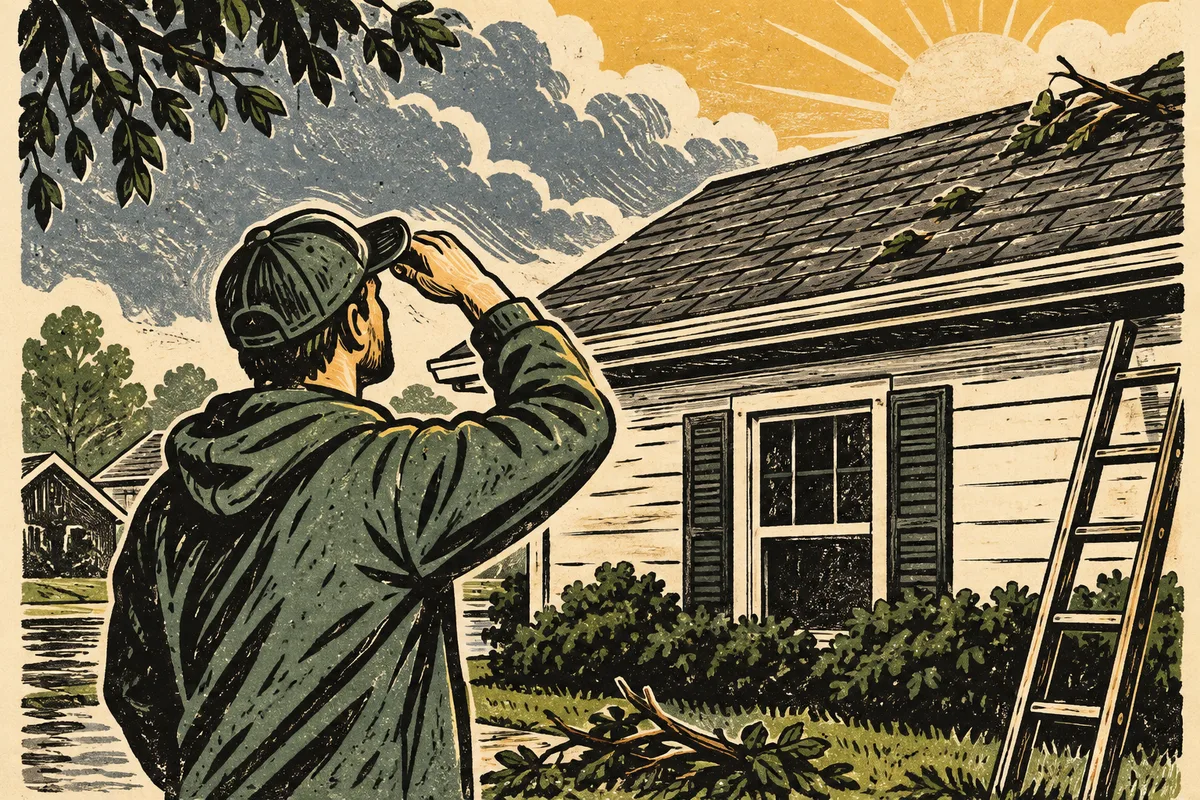
After the Storm: How to Check Your Roof Safely
Storms roll through Bradenton fast, and once the wind dies down and the rain clears, most homeowners want to know one thing: is my roof okay? It's a fair question, and checking things out right away can help you catch problems before they turn into bigger headaches inside your home.
The good news is that you can spot a lot of warning signs without ever leaving the ground. The important part is knowing what to look for, how to write it down, and when it's time to hand things off to someone with the right training and equipment.
This guide walks through the basics of a safe, ground-level check so you know what's normal, what's worth a closer look, and why climbing up there yourself usually isn't the best idea.
Start With a Walk Around the House
Before you do anything else, take a slow walk around the outside of your home. Look up at the roofline from a distance and pay attention to anything that looks out of place. Shingles that are curled, cracked, or missing altogether are easy to spot from below, and so are dented or bent sections on a metal roof.
Tile roofs are a little different. Watch for tiles that look cracked, shifted out of line, or completely gone. Even a small gap can let water sneak in over time, so it's worth noting even if it seems minor.
While you're walking around, glance at the soffit and fascia along the edges of the roof. Warped or sagging sections, peeling paint, or gaps where there shouldn't be any are all signs that water may have found its way in. Check the gutters too. Clogged gutters, loose sections, or gutters pulling away from the house can point to damage that started higher up.
Don't forget to look at your siding while you're at it. Cracked panels, dents, or pieces that have come loose can happen during the same storm that affected your roof.
Check the Inside of Your Home, Too
Roof damage doesn't always show up outside first. Head into your attic if you have access, and bring a flashlight. Look for damp spots, staining on the wood, or a musty smell that wasn't there before. These are often the earliest clues that water is getting through somewhere.
Inside your living space, check ceilings and walls for new spots, discoloration, or soft patches. If you have a skylight, look closely around its edges for drips or moisture, since that's a common spot for small leaks to start after high winds or heavy rain.
Write It Down and Take Photos
Once you've looked things over, take a few minutes to document what you saw. Photos and notes are helpful for your own records and make it much easier to explain the situation when you call for an inspection.
Try to get wide shots of each side of your home along with closer photos of anything that caught your eye, like a missing shingle or a dented gutter section. Jot down the date and any details you noticed, such as new sounds during the storm or areas that seem different than before.
Hold onto this information even after things are repaired. Having a record of what your roof looked like before and after a storm can be useful down the road.
Why Climbing Up There Isn't the Move
It's tempting to grab a ladder and take a closer look yourself, but walking a roof after a storm comes with real risks. Wet or damaged surfaces can be slippery and unstable, and it's easy to misjudge how solid a section is just by looking at it from below.
There's also the matter of what you can't see. Loose tiles, soft spots under shingles, or small punctures in flashing often aren't obvious until someone is up close and moving carefully across the surface. A trained eye knows where to step, what to check underneath, and how to spot damage that looks minor but could lead to a leak later.
This is really where a professional roof inspection earns its place. It's not just about confirming what you already saw from the ground, it's about catching the things a ground-level check can miss altogether.
When You're Ready, Give Us a Call
If your ground-level check turned up anything that concerns you, or if you'd just like a second set of eyes after a storm, SmithBuilt Roofing & Exteriors is here to help homeowners across Bradenton. From roof inspections and storm damage repair to emergency tarping and leak repair, we're glad to walk through what we find and explain your options in plain language.
Every roof and every storm is a little different, so if you have questions about your specific situation, don't hesitate to reach out. It's always better to ask than to wonder.
Questions about your own situation? The team at SmithBuilt Roofing & Exteriors is happy to help — call us at (941) 932-2441 or request an appointment.
This article is for general information only.