Attic Ventilation: The Hidden Key to a Healthy Roof
Most homeowners think about their roof only when they spot a leak or a missing shingle. But some of the most damaging problems actually start in a place you rarely look: the attic. The air moving through that space plays a bigger role than most people realize in how long your roofing materials hold up and how comfortable your home feels day to day. When that airflow gets blocked or slows down, the effects can quietly spread from the attic into the rest of the house.
At SmithBuilt Roofing & Exteriors, we run into this pattern often in homes around Bradenton. A roof can look perfectly fine from the driveway while heat and moisture are building up underneath, out of sight. Understanding how attic airflow works can help you notice small issues early, before they grow into something more involved.
What Happens When Air Gets Stuck
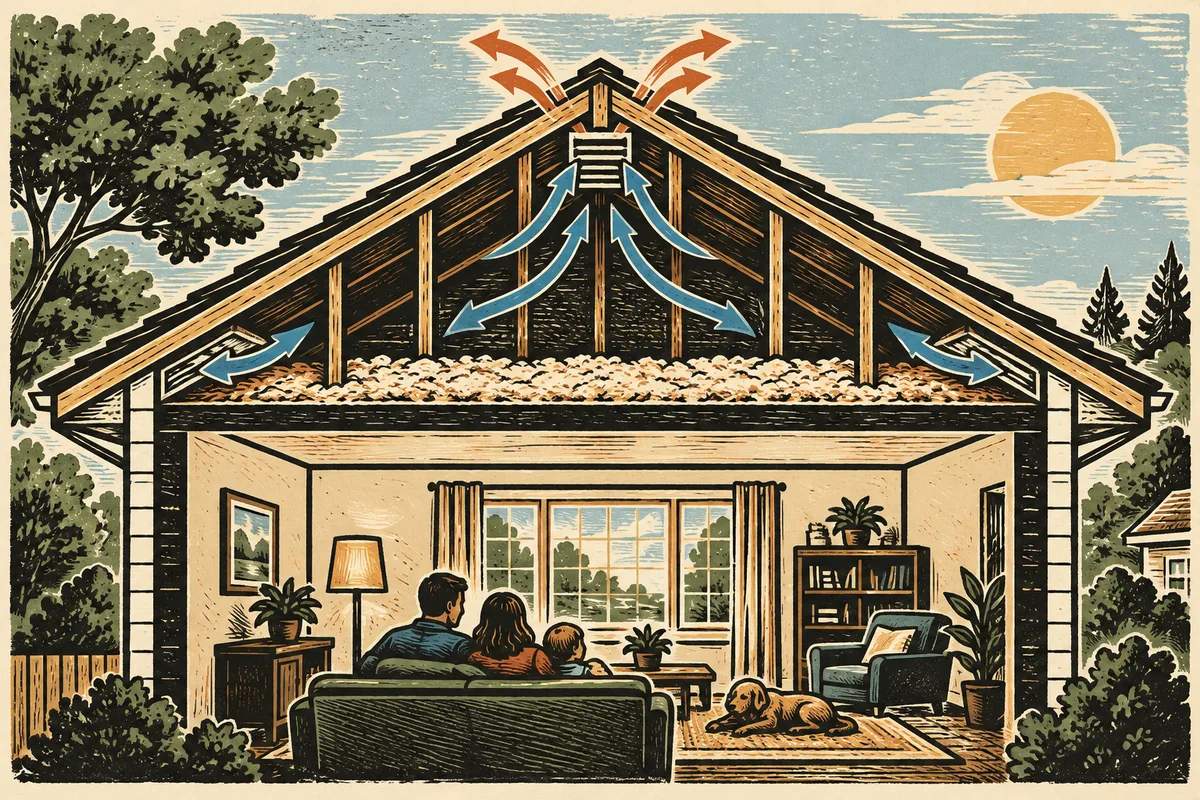
An attic is supposed to breathe. Cooler air comes in low, near the soffits, and warm air escapes up high, near the ridge or through roof vents. When this movement is working the way it should, your attic stays close to outdoor temperature instead of turning into an oven. Without that flow, heat has nowhere to go, and it builds up directly under your roof deck.
That trapped heat bakes the underside of your shingles day after day. Over time, this kind of constant heat exposure can dry out and weaken roofing materials faster than normal, causing them to curl, crack, or lose their protective granules sooner than they should. On the flip side, a poorly vented attic can also trap moisture from everyday household activities like cooking, showering, and laundry. That moisture has to go somewhere, and often it settles into the wood framing, insulation, and roof decking, creating the kind of damp environment where wood rot and mold can take hold.
Signs Your Attic Might Be Starved for Air
A few clues tend to show up before things get serious. Upstairs rooms that feel noticeably hotter than the rest of the house, even with the air conditioning running, can point to an overheated attic pushing warmth down through the ceiling. A musty smell when you open the attic hatch is often a sign that moisture has been sitting still for a while instead of moving out.
You might also notice discoloration or staining on the underside of the roof deck, insulation that feels damp or looks matted down, or shingles that appear to be aging unevenly across different parts of the roof. None of these signs mean disaster is around the corner, but they are worth paying attention to. Catching them early gives you more options and often means a simpler fix.
Why This Matters More Here on the Gulf Coast
Bradenton homes deal with a longer stretch of heat and humidity than most parts of the country. That combination puts extra strain on a roof that already has limited airflow. When you add in the moisture that comes with our storm season, an attic that cannot properly exchange air has even less of a chance to dry out between rain events.
This is one reason routine roofing maintenance and periodic inspections matter so much here. A trained eye can spot early signs of heat and moisture stress in the attic that are easy to miss from inside the house.
How Ventilation Works With the Rest of Your Roof
Good attic airflow depends on a balance between intake and exhaust. Intake vents, often located at the soffits, pull cooler outside air into the attic. Exhaust vents, usually near the roof ridge, let warm air escape. If one side of that system is blocked, damaged, or undersized, the whole balance gets thrown off, no matter how well the other side is working.
This is why ventilation problems often connect to other parts of the roof system. Damaged or clogged soffits can choke off intake air before it ever reaches the attic. Fascia issues can affect how well vents and gutters do their job together. Even the type of roofing material you have, whether shingle, tile, metal, or flat roofing, can influence how heat and moisture behave underneath it. Looking at ventilation on its own rarely tells the whole story, which is why a full roof inspection tends to give a clearer picture.
When to Call for a Closer Look
If you have noticed hot upstairs rooms, a musty attic smell, or shingles that seem to be wearing out faster in certain spots, it is worth having someone take a look before those signs turn into bigger repairs. Attic ventilation is not something you can fully judge by climbing up on the roof for a quick glance, since a lot of what matters is happening inside the attic and roof deck itself.
If you are dealing with any of these signs, or you simply want a better understanding of how your attic is performing, give SmithBuilt Roofing & Exteriors a call. We are happy to talk through what you are seeing and help you figure out the right next step for your home.
Questions about your own situation? The team at SmithBuilt Roofing & Exteriors is happy to help — call us at (941) 932-2441 or request an appointment.
This article is for general information only.