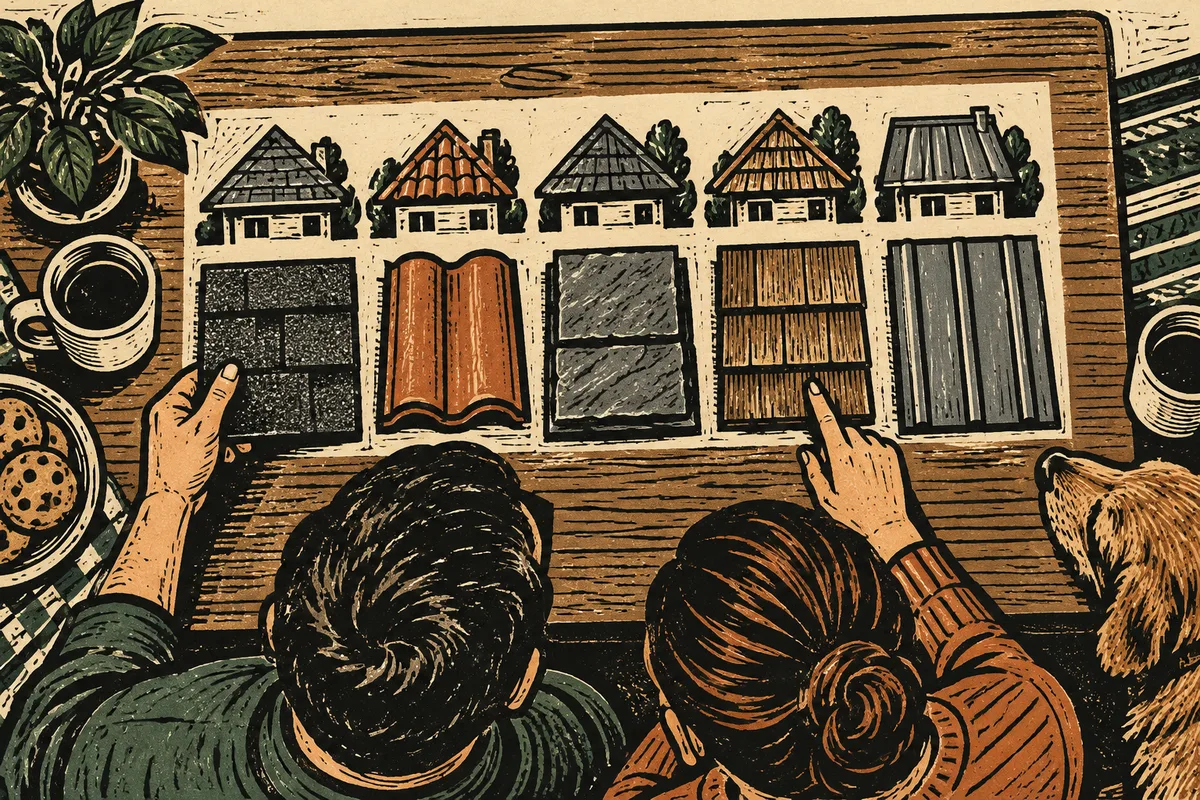
How Long Roofs Last, Material by Material
One of the most common questions we hear from homeowners in Bradenton is simple: how long is my roof supposed to last? The honest answer depends on what your roof is made of, how it was installed, and how much sun, rain, and salt air it has soaked up over the years.
Every material has a general range you can expect under normal conditions. But normal conditions on the Gulf Coast look a lot different than normal conditions in, say, Ohio. Our humidity, intense sun, and storm season all play a role in how quickly a roof shows its age.
Below is a straightforward look at common roofing materials, their typical lifespans, and the local factors that can stretch or shrink those numbers. If you ever want an honest read on where your own roof stands, we are happy to talk it through with you.
Asphalt Shingle Roofs
Asphalt shingles are the most common roofing material in the country, and for good reason. They are versatile, come in a wide range of styles, and work well on most home shapes. Under typical conditions, shingle roofs are often expected to last somewhere in the range of fifteen to twenty five years, depending on the quality of the shingle and how well the roof was ventilated and installed.
In our part of Florida, intense sun exposure tends to dry out and age shingles faster than in cooler climates. Heat causes the asphalt to lose its flexibility over time, which can lead to curling or cracking sooner than you might expect. Good attic ventilation makes a real difference here, since trapped heat under the roof deck accelerates wear from the underside as well.
Wind is another factor. Bradenton sees its share of strong storms, and shingles rated for higher wind speeds tend to hold up better through those events. If your shingle roof is approaching the older end of its expected range, a roof inspection can give you a clearer picture of what condition it is really in.
Tile Roofs
Tile roofing, whether clay or concrete, is a popular choice in our area for a reason beyond looks. Tile is naturally suited to hot, humid climates and can last considerably longer than shingles, often in the range of fifty years or more for the tiles themselves.
The catch is that the tile is only part of the system. Underneath every tile roof is an underlayment that does the actual waterproofing work, and that underlayment does not last as long as the tile above it. In humid coastal air, underlayment can wear out well before the tiles show any visible damage, which is why a roof that looks fine from the street can still have leaks starting underneath.
Because of this, tile roofs benefit from periodic roofing maintenance and inspection, even when nothing looks obviously wrong. Cracked or slipped tiles after a storm should also get attention quickly, since a small gap can let water reach the underlayment sooner than it should.
Metal Roofs
Metal roofing has become increasingly popular along the Gulf Coast, partly because it tends to hold up well against wind and heat. Depending on the type of metal and coating used, a metal roof can often be expected to last in the range of forty to seventy years.
Salt air near the coast can affect certain metal finishes over time, so the quality of the coating matters more here than it might inland. A well-installed metal roof with a good protective finish tends to shrug off sun and moisture better than many other materials, which is part of why it has such a strong reputation in Florida.
Fasteners, flashing, and seams are usually where issues start on a metal roof rather than the panels themselves. Keeping an eye on those areas, especially after major storms, helps the rest of the roof reach its full potential lifespan.
Flat and Low-Slope Roofs
Flat and low-slope roofs, often found on additions, garages, lanais, or commercial buildings, work differently than sloped roofs because water does not run off as quickly. Depending on the specific system used, these roofs typically last somewhere in the range of fifteen to thirty years.
Standing water is the biggest local challenge for flat roofs in a place like Bradenton, where heavy rain can arrive fast and often. Ponding water that sits for extended periods puts stress on the roofing membrane and can shorten its useful life if drainage is not working the way it should.
Roof coatings can help extend the life of an aging flat roof by adding a fresh protective layer, and they are worth discussing if your flat roof is showing early wear but is not ready for full replacement.
What Really Determines How Long Your Roof Lasts in Bradenton
Material matters, but it is not the whole story. Installation quality, attic ventilation, gutter and drainage function, and how quickly minor damage gets addressed all influence how close a roof comes to reaching its expected range.
Storm activity is a big variable here as well. A single strong system can shave years off a roof's remaining life even if the damage is not obvious right away, which is part of why storm damage repair and prompt leak repair matter so much on the Gulf Coast.
If you are trying to figure out where your own roof stands, whether it is nearing the end of its expected range or you just want a clearer sense of its condition, give us a call. We are glad to talk through what you are seeing and help you understand your options.
Questions about your own situation? The team at SmithBuilt Roofing & Exteriors is happy to help — call us at (941) 932-2441 or request an appointment.
This article is for general information only.