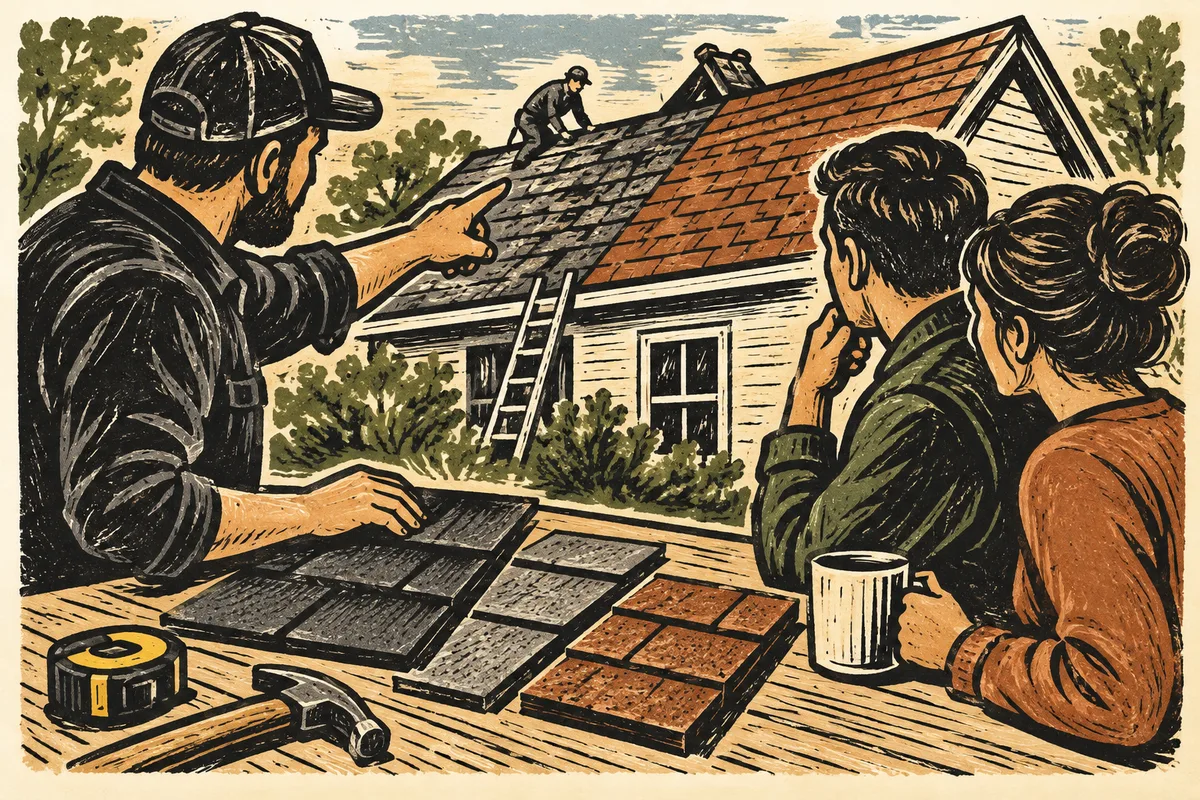
Roof Repair or Replacement? How Pros Decide
At some point, almost every homeowner in Bradenton finds themselves staring up at their roof, wondering if a repair will do the trick or if it's time for something bigger. It's a fair question, and it's not always an easy one to answer just by looking at a stain on the ceiling or a few missing shingles.
The good news is that the decision isn't really a guessing game. Roofing professionals weigh a handful of specific factors every time they inspect a roof, and once you know what those factors are, you can follow along with the reasoning yourself. Here's a look at how that thought process usually works.
How Old Is the Roof?
Age is one of the first things a roofer checks, and for good reason. Every roofing material has a general lifespan, and where a roof falls in that window says a lot about whether repair makes sense. A roof that's still fairly young usually has plenty of life left in the materials around the damaged spot, so patching one area tends to hold up well over time.
On the other hand, a roof that's near the end of its expected lifespan is a different story. Even if only one section looks bad, the rest of the roof is likely wearing down at a similar rate. Fixing one spot on an older roof sometimes just means another spot will show a problem a short while later, so the age of the roof often shifts the conversation from patchwork toward a full replacement.
How Much of the Roof Is Actually Affected?
Extent of damage matters just as much as age. A single leak, a small area of lifted shingles, or one damaged flashing point can usually be handled with a targeted repair. These kinds of issues are localized, and fixing them doesn't require touching the rest of the roof.
Widespread damage tells a different story. If a roofer finds soft spots in several areas, multiple leaks, or damage spread across different slopes, that's usually a sign of a bigger underlying issue rather than isolated wear. When damage shows up in more than one place, it often makes more sense to address the whole roof at once instead of chasing individual problems as they pop up.
How Many Layers Are Already on the Roof?
This one surprises a lot of homeowners. Some roofs, especially older shingle roofs, have more than one layer of material stacked on top of each other from a previous job. Building codes generally limit how many layers a roof can have, and once a roof is already at that limit, a simple repair or another layer on top isn't an option.
In these cases, replacement becomes less about preference and more about what's actually possible. It's one of those details that isn't visible from the ground, which is part of why a hands-on inspection matters so much before any decision gets made.
What Does the Rest of the Roof Look Like?
A good inspection doesn't stop at the obvious problem area. Roofers also look at the general condition of the surrounding materials, the soffit and fascia, and areas around vents, skylights, and gutters where water tends to find its way in. If everything nearby looks solid, that supports the case for a repair.
If the surrounding areas show their own signs of wear, though, it usually means the roof as a whole is aging out, even if the damage started in just one spot. This wider view is what separates a quick patch job from a decision that actually holds up over the years ahead.
When You're Not Sure, Ask
Every roof and every situation is a little different, and the factors above don't always point in the same direction. Sometimes an older roof with one small issue is still a fine candidate for a repair. Sometimes a younger roof with the wrong kind of damage needs more attention than expected.
If you're looking at your own roof and trying to figure out where it falls, don't hesitate to call SmithBuilt Roofing & Exteriors. We're happy to talk through what you're seeing, ask a few questions about your roof's history, and help you understand what your options look like before anything moves forward.
Questions about your own situation? The team at SmithBuilt Roofing & Exteriors is happy to help — call us at (941) 932-2441 or request an appointment.
This article is for general information only.