Reciprocating Saws
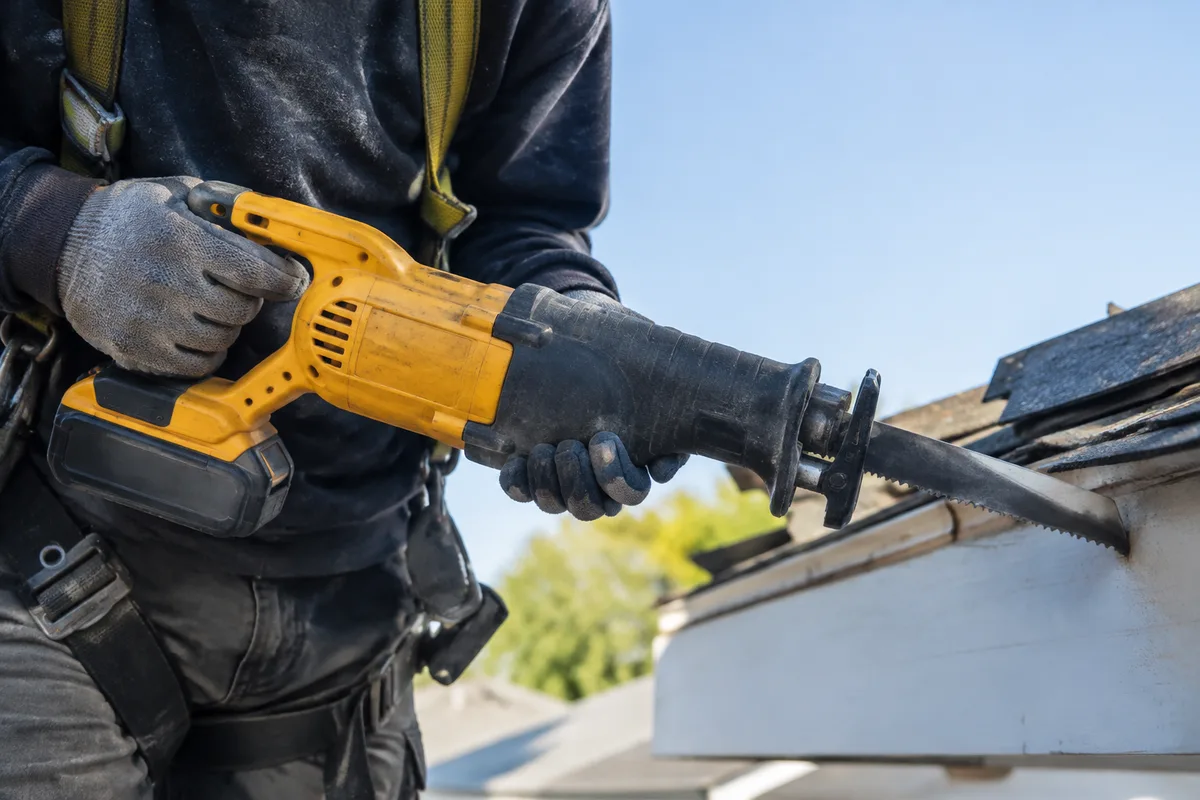
Reciprocating Saws
A reciprocating saw earns its place on a tear-off because it cuts through rotted decking, embedded fasteners, and old flashing without dragging the surrounding material apart. On a Bradenton roof, that control matters — the goal is to remove exactly what has failed and leave sound decking, rafters, and blocking untouched.
Where It Fits During a Tear-Off
- Rotted Decking — Soft or water-damaged plywood is cut back to solid wood before new decking goes down.
- Old Fasteners — Corroded nails and screws that won't back out cleanly are cut free instead of torn through the surrounding wood.
- Tight Sections — Corners around chimneys, valleys, and penetrations where a larger saw won't reach.
Working Alongside Other Tear-Off Tools
The reciprocating saw doesn't work alone. Roofing shovels and tear-off spades strip material down to a bare deck, pry bars and nail pullers clear what can be removed intact, and wood moisture meters confirm which decking and framing are dry enough to keep. Together, that sequence is what lets a roof-over question get answered honestly instead of guessed at.